
Parents often look for ways to keep their children active, entertained and away from screens. But when it comes to choosing between indoor and outdoor play, many wonder which one is actually better for their child’s development.
Outdoor play gives children the freedom to explore nature, run around and enjoy fresh air. Indoor play, on the other hand, offers opportunities for creative activities, interactive games and physical play in a more controlled environment.
Both have their own benefits, and children don’t necessarily need to choose one over the other. The best approach is to give them opportunities to enjoy different types of play depending on their age, interests, weather and surroundings.
Let’s look at how indoor and outdoor play support children’s growth and why having a balance of both matters.
1. Benefits of Indoor Play for Children

Indoor play isn’t just about keeping children occupied when they cannot go outside. It can offer plenty of opportunities for learning, movement and creativity.
Here are some ways indoor activities can benefit children.
Encourages Creativity and Imagination
Activities such as drawing, building blocks, puzzles, pretend play and arts and crafts allow children to use their imagination.
For example, a child building a tower with blocks is not simply playing. They are experimenting with shapes, balance and problem-solving.
These simple activities help children express their ideas and explore their creativity.
Provides Opportunities for Active Play
Indoor play doesn’t always mean sitting quietly or playing with toys. Children can enjoy slides, climbing structures, soft-play equipment, ball pits and interactive attractions. These activities encourage movement and help children practise coordination, balance and basic motor skills.
Offers a Convenient Option During Hot Weather
In places like Dubai, spending long hours outdoors can be uncomfortable during particularly hot months. Indoor play areas provide an alternative where children can enjoy physical activities away from direct sunlight and outdoor heat. Parents can plan indoor outings during summer, weekends or days when the weather makes outdoor activities less practical.
Encourages Social Interaction
When children play with siblings or other children, they get opportunities to communicate, share toys, take turns and participate in group activities. Even simple games can help children become more comfortable interacting with others.
2. Benefits of Outdoor Play for Children
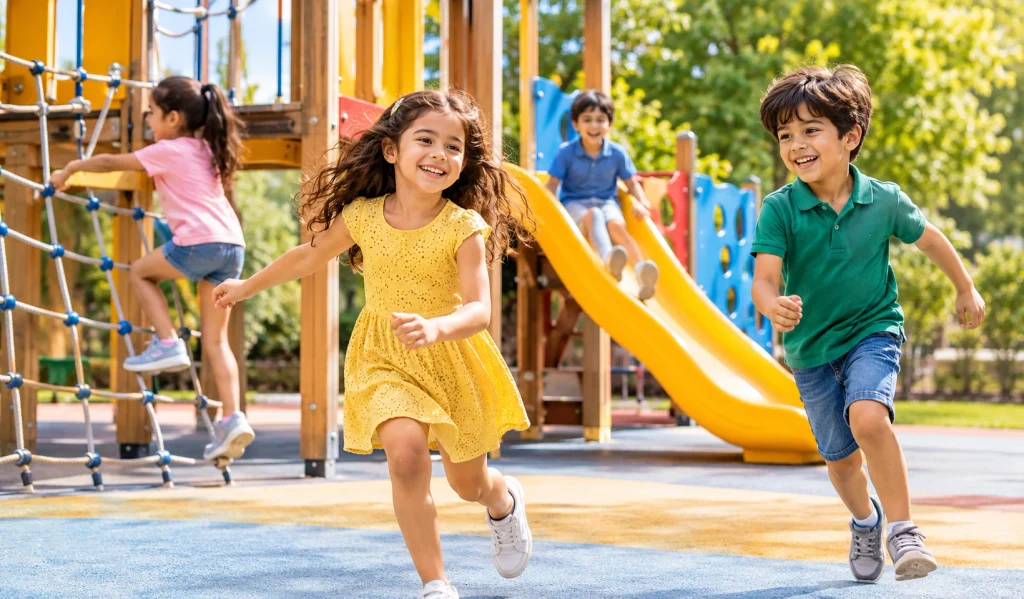
Outdoor play gives children a different kind of experience. It allows them to explore their surroundings, discover new things and enjoy more open space.
Some important benefits include:
Supports Physical Development
Running, jumping, cycling, climbing and playing ball games encourage children to move their bodies in different ways. These activities help develop strength, balance, coordination and physical fitness. Regular opportunities for active play also help children develop healthy movement habits as they grow.
Helps Children Explore Nature
Playing outdoors gives children opportunities to experience the natural environment. They can observe plants, watch birds, collect leaves, play with sand or simply explore their surroundings. These experiences can encourage curiosity and help children develop an interest in the world around them.
Improves Mood and Reduces Stress
Children sometimes need a break from indoor routines and structured activities. Spending time outside, enjoying fresh air and moving freely can help them relax and feel refreshed. Outdoor play also gives children opportunities to release energy and enjoy time away from screens.
Builds Confidence and Independence
Outdoor activities often involve trying something new, solving small challenges and making decisions independently.
For example, learning to ride a bicycle or climbing an age-appropriate playground structure can help children develop confidence.
With suitable supervision, these experiences allow children to explore their abilities at their own pace.
3. Indoor Play vs Outdoor Play: Understanding the Differences
Both environments support children’s development, but they offer different experiences.
| Indoor Play | Outdoor Play |
| Suitable during hot or rainy weather | Allows children to enjoy nature and fresh air |
| Offers structured play equipment and activities | Provides more opportunities for open-ended exploration |
| Encourages creative and interactive activities | Encourages movement and exploration |
| Can support social interaction through group activities | Provides opportunities for group games and outdoor adventures |
| Takes place in a more controlled environment | Introduces children to changing natural surroundings |
Neither option is automatically better than the other. What matters is giving children enough opportunities to move, explore, interact and enjoy different experiences.
4. Which Type of Play Is Better for Different Age Groups?
Children have different interests and abilities as they grow. Choosing activities that match their age and development can make playtime more enjoyable.
Babies and Infants
Babies benefit from simple activities that encourage movement and sensory exploration.
Indoor activities such as supervised tummy time, soft toys, sensory play and interactive games can help them explore their surroundings.
When the weather is suitable, short outdoor experiences with a parent or caregiver can also introduce babies to different sights and sounds.
Toddlers (1–3 Years)
Toddlers are naturally curious and love exploring new things. Indoor activities such as building blocks, soft play, simple puzzles and pretend games can keep them engaged.
Outdoor activities like walking, playing with balls, exploring a garden and visiting age-appropriate playgrounds provide additional opportunities for movement.
Preschoolers (3–5 Years)
Preschoolers usually enjoy activities that involve imagination, movement and interaction with other children. They can benefit from indoor creative activities, obstacle courses, climbing structures, outdoor games and nature exploration. A combination of both environments gives them opportunities to develop different skills.
School-Age Children
Older children often enjoy more challenging activities. Indoor options may include interactive games, sports facilities, creative workshops and team activities. Outdoor options can include cycling, swimming, football, nature walks and playground games. Allowing children to explore different interests helps them discover the activities they enjoy most.
5. How Can Parents Balance Indoor and Outdoor Play?
Finding the right balance doesn’t have to be complicated. A few simple changes to your family’s routine can help children experience both types of play.
Plan outdoor activities when the weather is comfortable.
Take children to parks, gardens, playgrounds or open spaces when temperatures and conditions are suitable.
Include indoor activities in your weekly routine.
Creative activities, puzzles, building games and indoor play centres can provide enjoyable alternatives, particularly during hot or rainy days.
Let children choose their activities.
Some children enjoy running around, while others prefer drawing, building or pretend play. Giving them choices makes playtime more enjoyable.
Limit unnecessary screen time.
Encourage children to spend more time moving, exploring and interacting rather than relying on television, phones or tablets for entertainment.
Allow time for unstructured play.
Not every activity needs to be planned. Giving children time to decide what they want to play can encourage imagination, independence and problem-solving.
6. What Should Parents Consider When Choosing a Play Area?
Whether you are visiting an indoor playground or an outdoor park, the environment matters.
Before choosing a play area, consider a few things:
- Age suitability: Make sure the activities are appropriate for your child’s age and abilities.
- Safety: Look for well-maintained equipment and suitable play surfaces.
- Cleanliness: Check whether the play equipment and surrounding areas are regularly cleaned.
- Supervision: Understand the supervision arrangements and stay involved according to your child’s needs.
- Variety of activities: Choose places that offer different opportunities for movement, creativity and interaction.
- Comfort: Consider weather conditions, available facilities, seating and access to drinking water.
These small checks can help parents make more informed decisions when planning family outings.
7. Indoor Play Options for Families in Dubai
Dubai’s weather can make outdoor activities challenging during certain months, particularly in summer. This is when indoor entertainment destinations become useful options for families.
Parents can explore indoor play centres, creative workshops, interactive attractions and family entertainment venues.
For families visiting Dubai Mall, Boo Boo Laand is one indoor play destination worth exploring. It offers different play attractions where children can enjoy active play and spend time with other children. Parents can check the available attractions, age suitability and ticket information before planning their visit. Indoor activities can be a convenient way to keep children entertained when outdoor play isn’t practical.
Frequently Asked Questions
Is indoor play as beneficial as outdoor play?
Yes. Indoor play can support creativity, problem-solving, social interaction and physical movement. Outdoor play offers additional opportunities for nature exploration, physical activity and open-ended experiences. Both contribute to children’s development.
How much time should children spend playing indoors and outdoors?
There is no single indoor-to-outdoor time ratio that works for every child. The important thing is to provide regular opportunities for active, age-appropriate play throughout the day. Children’s needs vary depending on their age and development.
Is outdoor play important for toddlers?
Yes. Outdoor play gives toddlers opportunities to walk, run, explore and experience their surroundings. It can support physical development, coordination and curiosity. Activities should always be appropriate for their abilities and supervised by an adult.
What are some fun indoor activities for children in Dubai?
Children can enjoy indoor playgrounds, soft-play areas, climbing activities, ball pits, creative workshops, puzzles and interactive games. Parents can choose activities based on their children’s ages and interests.
Final Thoughts
So, which is better: indoor or outdoor play?
The answer is that children benefit from both. Outdoor play gives them opportunities to explore nature, enjoy open spaces and stay physically active. Indoor play provides creative activities, interactive experiences and convenient options when going outside isn’t practical.
Instead of choosing one over the other, parents can make both part of their children’s routine.
What matters most is giving children enough time and freedom to play, explore, learn and enjoy their childhood.